
Thinking About Galileo
I want to talk about one of my favorite historical icons, Galileo Galilei. To me, he's basically the patron saint of scientific mystics.
Now, before someone comes for me in the comments, no, Galileo wasn't a mystic in the way we usually use that word. He wasn't writing about altered states of consciousness or esoteric practices. He was a mathematician, physicist, astronomer, and natural philosopher. But he also believed that studying nature was a way of understanding God's creation. One of his most famous ideas was that the universe is written in the language of mathematics. I don't know...that's a pretty spiritual way to look at science if you ask me. He also argued that Scripture and nature couldn't truly contradict each other because they came from the same Creator. If they ever seemed to disagree, then humans had misunderstood one or the other.
Like...what???
That's so logical, but somehow it's an idea that gets completely overlooked. I can only imagine the side-eyes this man got for pushing boundaries like that. It's honestly genius because he's not saying, "Science replaces God," and he's not saying, "Faith replaces observation." He's saying if you pay close enough attention to creation, you'll understand the Creator a little better. This dude looked at the sky through instruments instead of just faith and still ended up touching God. If you love physics, astronomy, history, or astrology, you at least know of my man! Galileo was genuinely innovative and seriously ahead of his time. His way of thinking reshaped how humans relate to the universe itself.
Before Galileo, people believed the Earth sat still at the center of everything. This view came from everyday observation and the teachings of thinkers like Aristotle and Ptolemy. Their ideas shaped how the universe was understood for centuries. The idea that the Sun might be at the center had already been introduced by Nicolaus Copernicus, but it was treated like an absurd abstract idea. Galileo challenged that by pointing a telescope at the sky and letting what he saw speak for itself.
Once the telescope entered the equation, those old ideas could finally be tested. While Hans Lippershey invented the telescope, Galileo was the one who turned it into a scientific instrument. He improved it and used it to study the sky night after night. He tracked patterns!!!!! You know I love that shit. For the first time, claims about the heavens had to survive direct observation. Galileo slowly began exposing cracks in ideas people had accepted for generations. All because he looked up. ❤️
What I love about Galileo is the way he paid attention. He didn't look at the universe to confirm what he already believed. He looked to see what was actually there. He was so open-minded. He trusted that paying closer attention to the world would lead to better understanding, not less meaning. He wasn't afraid that what he believed might unravel. I think he wanted the truth more than he wanted to be right.
Galileo showed us that curiosity and reverence don't have to be opposites. He was brave enough to ask how and why at a time when doing so was genuinely dangerous. His support of heliocentrism eventually led to a trial before the Roman Inquisition, and he spent the rest of his life under house arrest. His books were banned, but curiosity doesn't really care about walls.
I think that's why Galileo inspires me so much. Exploring consciousness and asking questions outside of what society considers "normal" can still be intimidating today. People get really uncomfortable when you start questioning ideas they've always accepted. This way of approaching the universe has always made sense to me. I'm not drawn to blind faith, and I'm not interested in reducing everything down until it loses its meaning either. I just want to understand how things work while still staying connected to how they feel.
We still live in a world where a lot of ideas get passed down without ever being looked at too closely. People are often told what to believe before they're encouraged to really observe for themselves. I think that's why Galileo still matters. His legacy isn't just heliocentrism. It's giving people permission to ask questions without losing their sense of wonder. I don't think asking questions is the opposite of faith. If anything, I think asking questions is one of the most honest ways we can search for the truth. If what we believe is true, it shouldn't be afraid of a question.
Images below in order from left to right
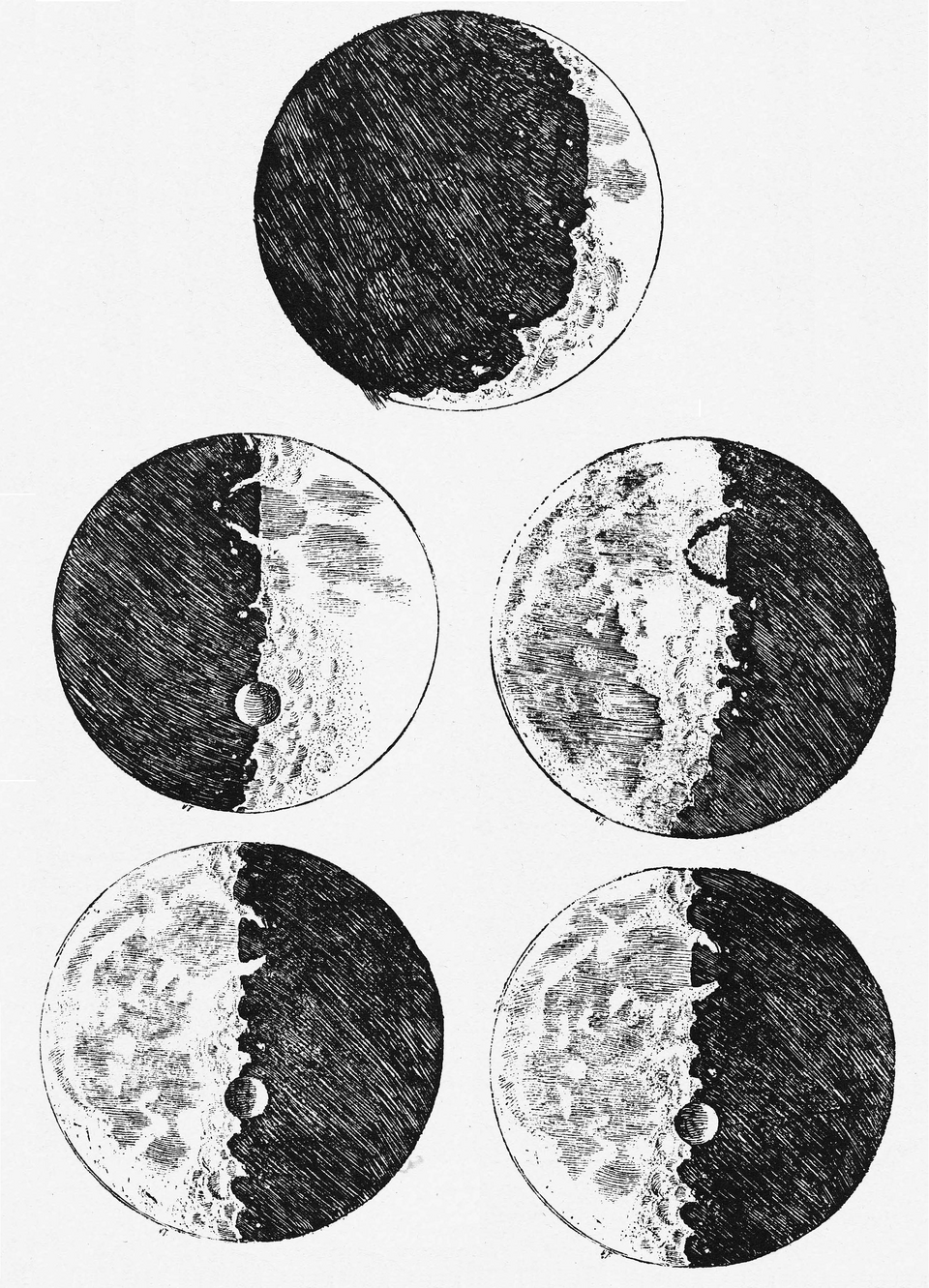
Galileo’s Moon Sketches
🔗 https://commons.wikimedia.org/wiki/File:Galileo%27s_sketches_of_the_moon.png
These are Galileo’s own sketches of the Moon from 1610. He drew what he actually saw, bumps and shadows included.
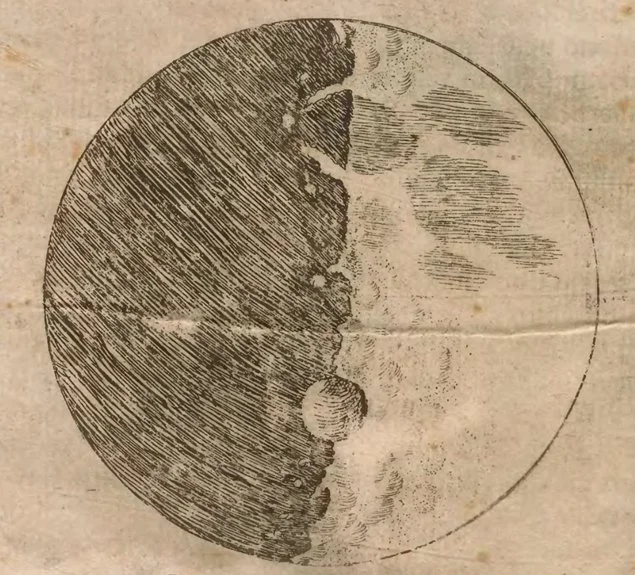
Reference:From Sidereus Nuncius, public domain.Half-moon illustration from Sidereus Nuncius:
🔗 https://commons.wikimedia.org/wiki/File:Sidereus_Nuncius_half_moon.jpg
One of Galileo’s early Moon drawings. Seeing texture up there was a big deal at the time.
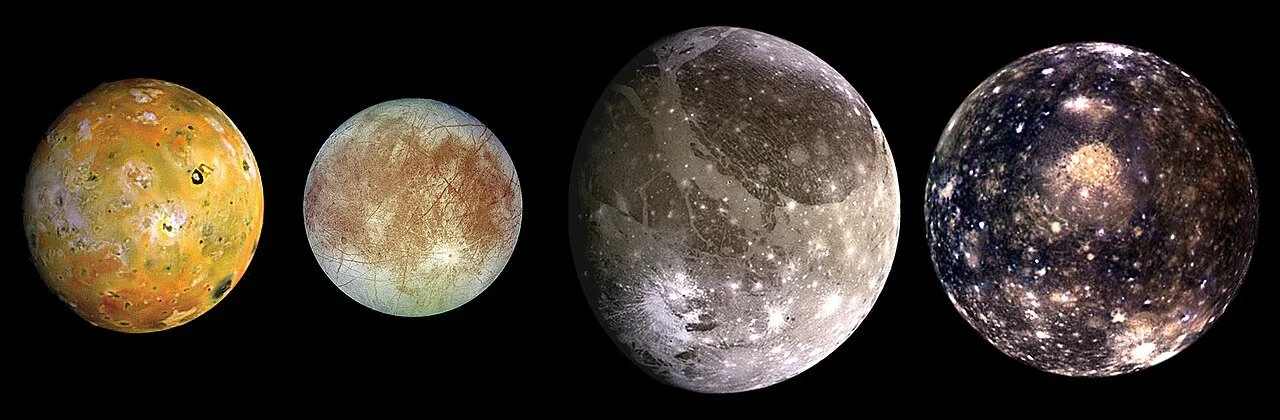
Reference:Sidereus Nuncius (1610), public domain.Jupiter’s Moons (Galilean Satellites)
🔗 https://commons.wikimedia.org/wiki/File:Galilean_satellites.jpg
The four moons Galileo found orbiting Jupiter. Proof that not everything in the sky revolves around Earth.
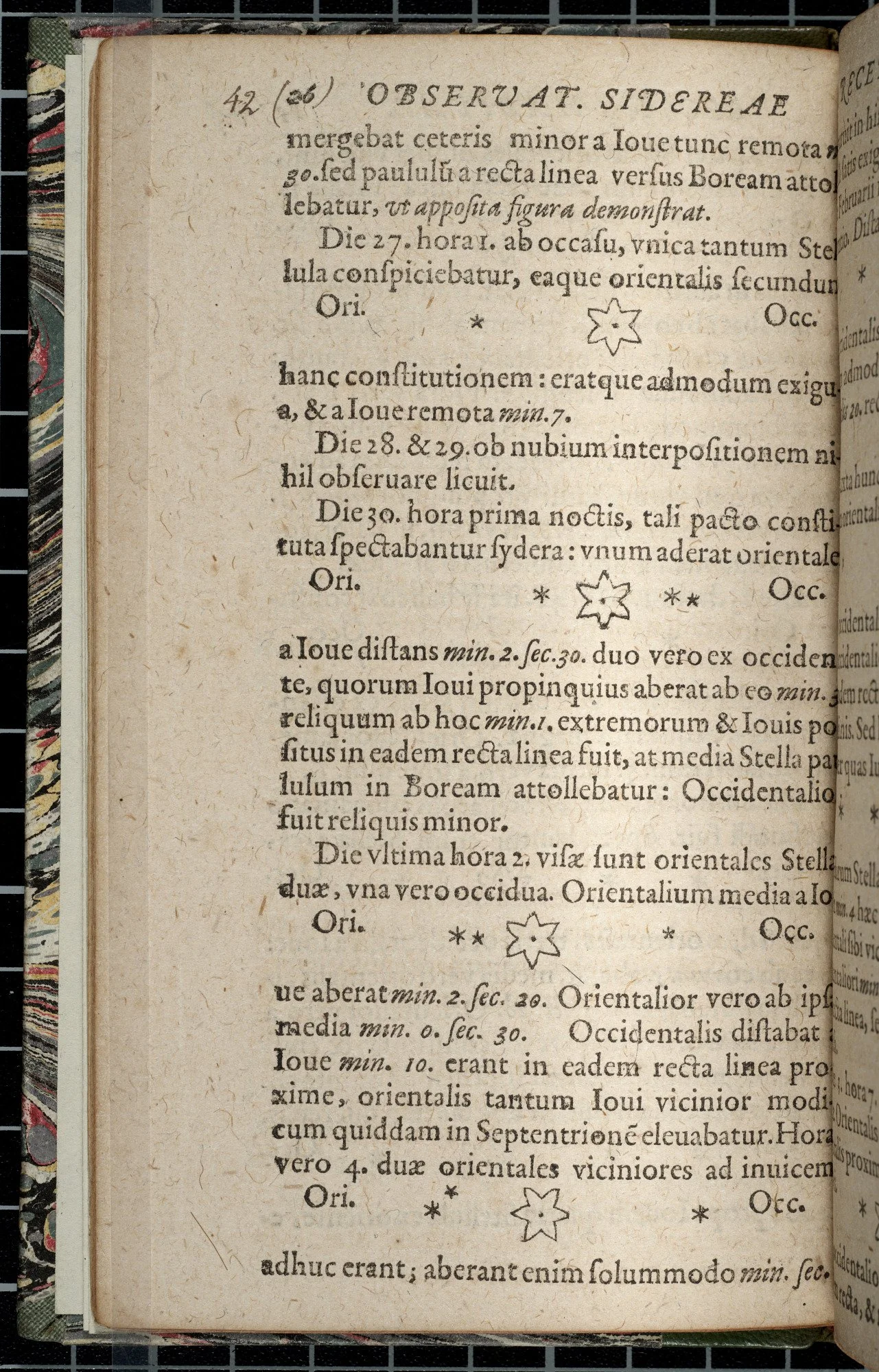
Reference:Galilean moons, public domain.Galileo’s Jupiter Research
🔗 https://library.si.edu/image-gallery/106646
Galileo’s notes on Jupiter and its moons. Night after night, watching the same dots move.
Reference:From Sidereus Nuncius, public domain (Smithsonian Institution).Title Page of Sidereus Nuncius
🔗 https://digital.archives.caltech.edu/collections/Images/RB-GG1610a-1
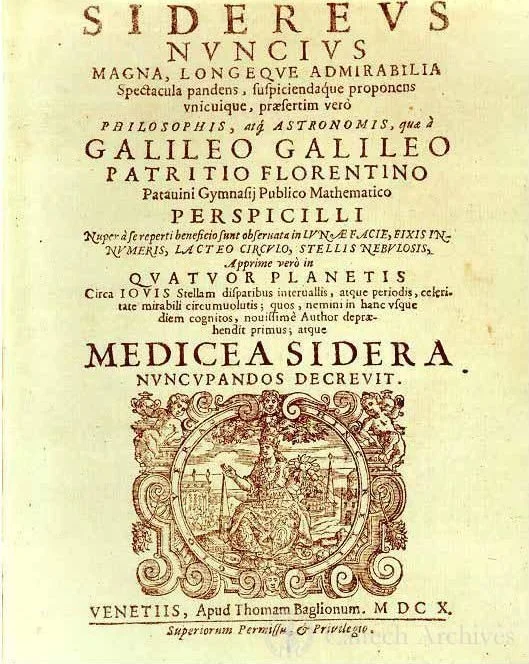
The title page of the book that got people very uncomfortable.
Reference:Sidereus Nuncius (1610), public domain.