The Paradox of Lord Shiva
Shiva is no doubt one of the most widely known and worshiped Vedic deities. He is part of the divine trio, but in mythology has more than once emerged as the supreme being. He is known as the cosmic destroyer, but it is important to note that destruction is almost always necessary for growth. Shiva’s stories are rich with lessons about deep connection to a consciousness that understands we are temporary. Encouraging us to remain in control of our emotions and not allow such things to cause unhappiness, because time is limited. We have finality in this lifetime, though our souls are forever. Shiva takes on many forms, some of the most well known being Rudra, Nataraja, Bhairava, and Ardhanarishvara. He is also the representation of the divine masculine in union, particularly with Shakti and later Parvati.
When you see Shiva, he is often depicted with Nandi, Rudraksha, and a Naga. Nandi is the sacred bull who serves as Shiva’s mount and devoted gatekeeper, symbolizing loyalty and devotion. Rudraksha are sacred seeds from the Elaeocarpus ganitrus tree, traditionally used as prayer beads. According to Hindu tradition, they are believed to have formed from Shiva’s tears. A Naga is a sacred serpent often depicted coiled around Shiva’s neck, representing protection and control over primal forces such as fear and death. It can also represent how poison can be both good and bad. On one hand, it can be used in medicine, but it can also kill. Shiva is also commonly seen with a crescent moon in his hair, symbolizing the cyclical nature of time, the ebb and flow of the mind, and his mastery over it. In many depictions, the sacred river Ganges (often personified as Ganga) is shown flowing from his hair, representing the story in which Shiva caught the powerful river in his matted locks and gently released it to Earth, preventing it from destroying the world. Shiva is also often covered in sacred ash known as vibhuti, which symbolizes the impermanence of life and the idea that all physical things eventually return to ash.
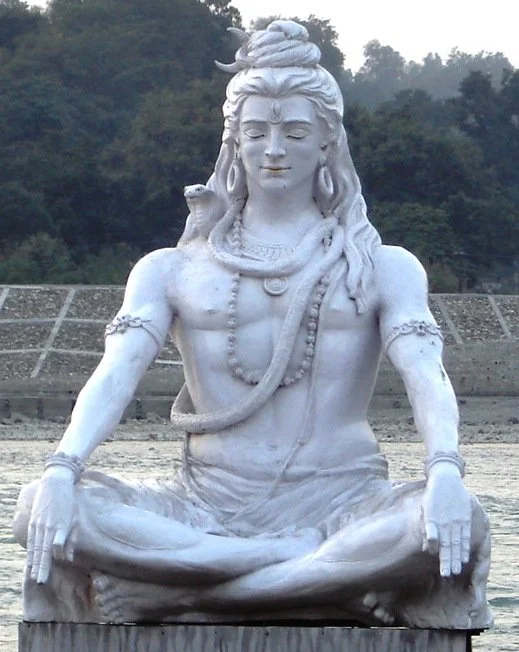
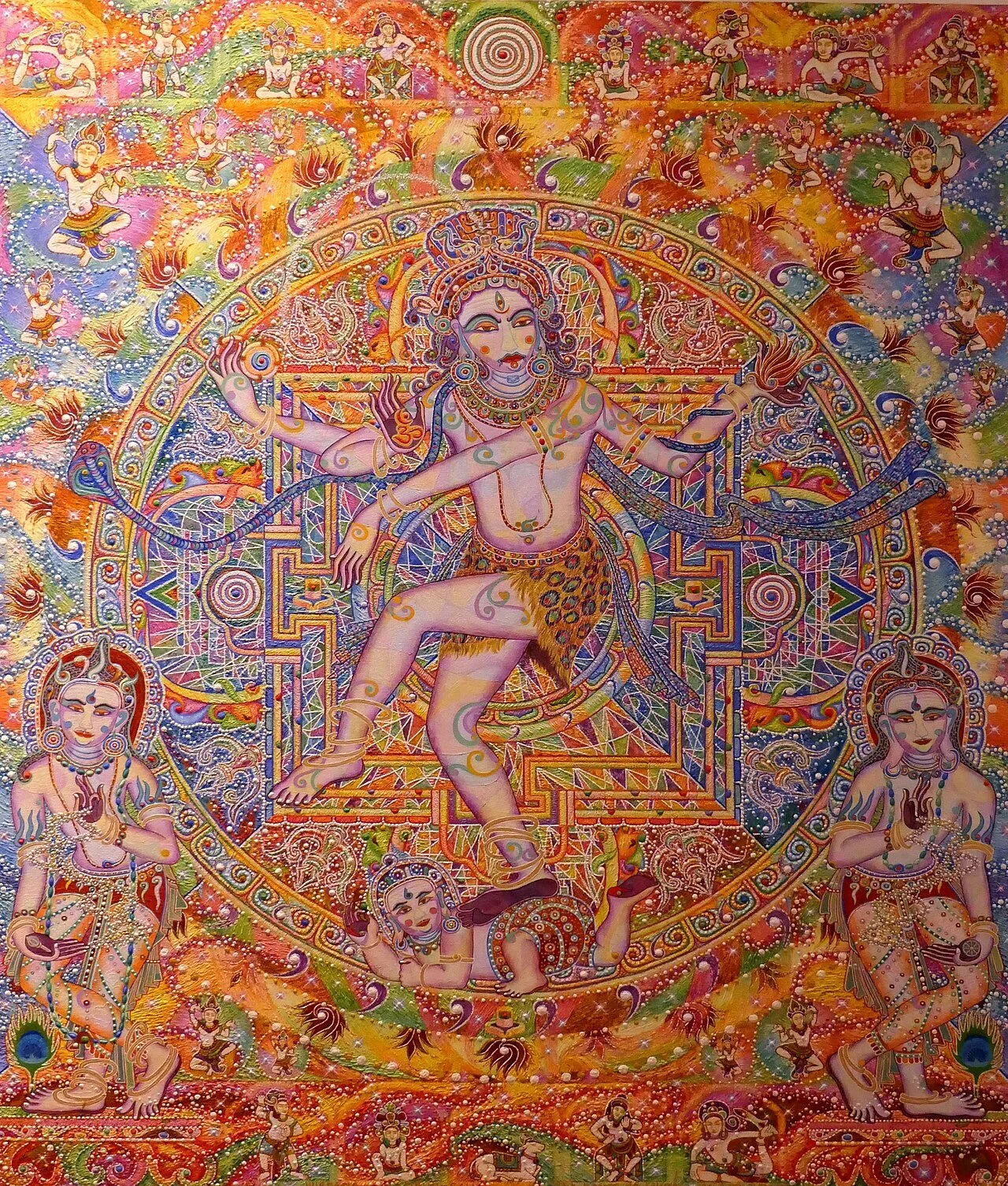
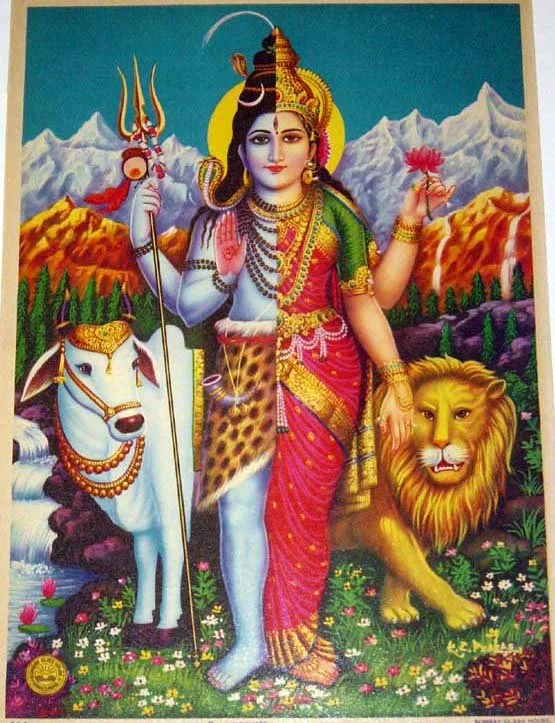
Below are images for reference. Links and descriptions cover photos in order from left to right.
🔗 https://commons.wikimedia.org/wiki/File:Shiva_meditating_Rishikesh.jpg
Here you can see Shiva meditating on the banks of the River Ganga in Rishikesh.
🔗 https://commons.wikimedia.org/wiki/File:005_The_Dance_of_Siva_by_I_NYoman_Wirdana,_Neka_Art_Museum,_Ubud,_Bali,_photograph_by_Anandajoti_Bhikkhu.jpg
The Dance of Siva by I NYoman Wirdana, Neka Art Museum, Ubud, Bali, photograph by Anandajoti Bhikkhu. Nataraj, the dancing form of Lord Shiva, is a symbolic synthesis of the most important aspects of Hinduism. The term 'Nataraj' means 'King of Dancers' (Sanskrit nata = dance; raja = king).
🔗 https://commons.wikimedia.org/wiki/File:Arddhanarishvara.jpg
This depicts Shiva with Parvati, symbolizing the union of the divine masculine and feminine. With them is Nandi, the sacred bull who serves as Shiva’s mount and devoted gatekeeper. In many temples, Nandi is placed facing Shiva’s shrine, eternally watching his lord.
The last image is A handmade Shiva Lingam, representing the formless and infinite nature of Shiva. The lingam is one of the most common symbols used in temples and home worship. My husband carefull crafted this one for our home.
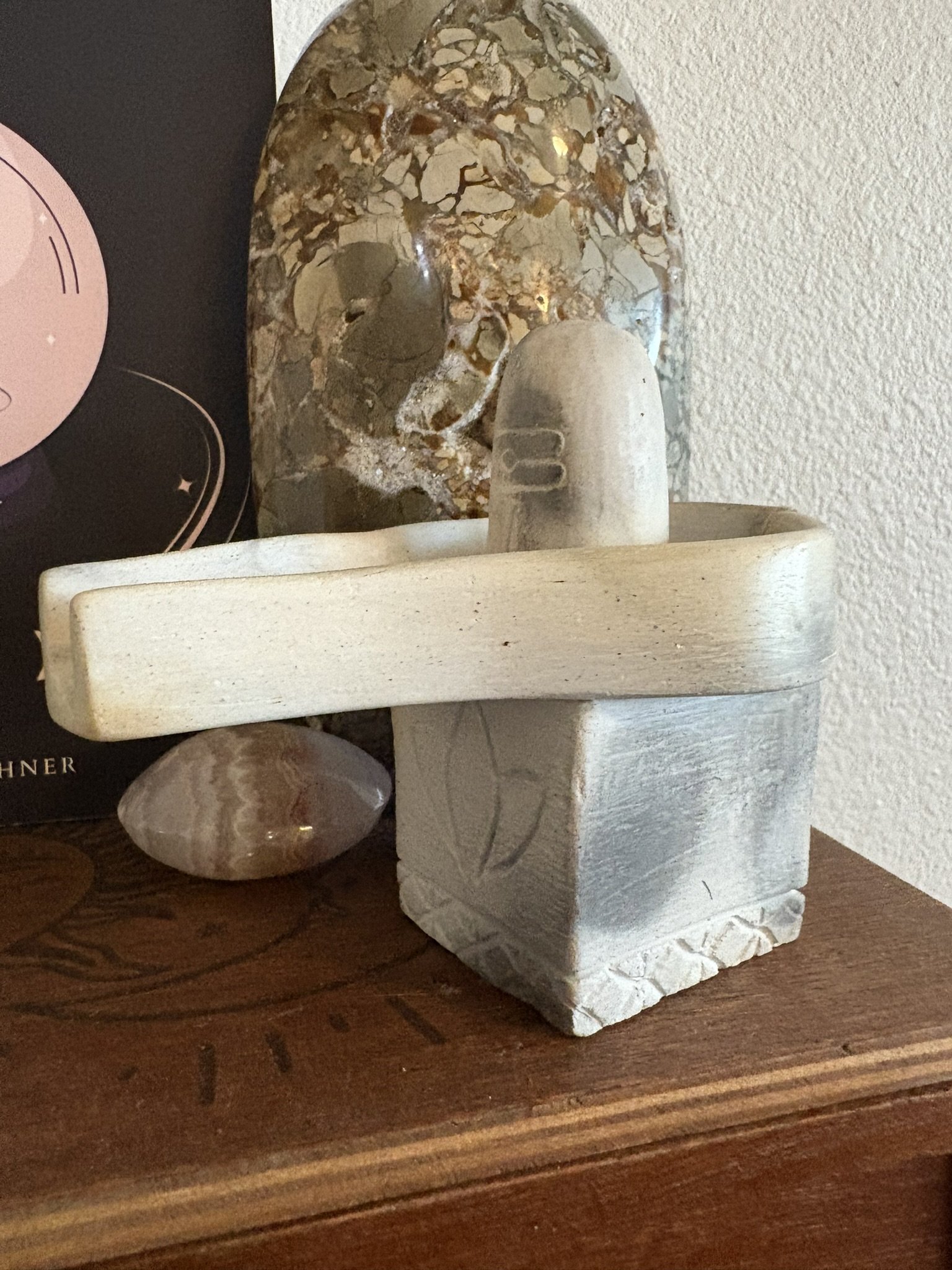
I would love to dive into the depths of Shiva’s mythology, so perhaps I will do parts 2, 3, 4, and 5, each with stories. But what I really want to talk about here are the paradoxes that come from his stories, which I think are so interesting. He is “the destroyer,” yet he saves the world. He is completely ascetic, yet a devoted husband who cares deeply for Shakti and Parvati. He is terrifying, representing destruction in a mind-bending way, and many people fear him, yet he is compassionate enough to lift curses from his devotees. Even the moon was saved from death by Shiva. And my personal favorite, he lives in a cremation ground, yet represents transcendence. This incredible god is humble enough to lower himself and live as close to death as possible, yet mentally able to reach enlightenment. For me, he is the ultimate example of complete detachment from the ego. He reminds me that nothing matters… but everything does.
The Infinite Pillar
The first story I want to share is the story of Lord Shiva as the Pillar. It is said that Lord Brahma, the creator, and Lord Vishnu, the sustainer, were arguing their supremacy over one another. While they were engaged in this disagreement, a shining lingam appeared between them. It stretched high into the sky through the clouds and seemed to have no beginning or end. The pair of arguing gods were awestruck by the magnitude of the lingam. Brahma and Vishnu decided the best way to settle their debate was through a challenge. Each would search for one end of the pillar, and whoever succeeded would prove their greatness. Vishnu transformed himself into a boar and descended deep into the earth, searching for the base of the pillar. Brahma began his journey upward into the sky, flying higher and higher in search of the top. After a while, Brahma came across a Ketaki flower that was drifting downward from above. Brahma then claimed that he had reached the top and used the flower as proof of his victory.
This deception angered Shiva. He revealed himself from the infinite pillar in his true form. Because of Brahma’s lie, Shiva cursed him that he would no longer be widely worshiped. To this day, Brahma remains the least worshiped of the primordial three. At this revelation, Brahma and Vishnu had no choice but to recognize that there was a divine power far greater than either of them. Side note: to me, this story represents how important creation is, but it can still be rooted in pride or deception. Sustenance is powerful, but it can become attachment to illusion. Only through destruction can something false truly be stripped away. Since this moment is believed to be the first time Shiva manifested as a lingam, the night became known as the sacred festival of Maha Shivaratri, considered especially auspicious for devotees of Shiva. In the end, the story reminds us that the divine cannot be measured, claimed, or conquered. It can only be recognized.
The Ascetic Who Falls in Love
This next story highlights the absolute divine union between Shiva and his devoted wife Parvati. Shiva was so ascetic that his solitude and detachment from worldly affairs made him seem completely resistant to the allure of love. But after the death of Shiva’s first wife, Sati, Shiva withdrew from the world completely. He entered meditation on Mount Kailash. He sat in this meditative state for thousands of years, neglecting his duties altogether. It was Lord Brahma who, one day, looked around and realized that nature had begun to lose its luster. The world was becoming stagnant, and without dissolution, Brahma could not create. Brahma then went to the great feminine force, Shakti, and asked for help. Shakti told Brahma that she would return, incarnated as a human woman, to bring Shiva out of his meditative state and back to his duties.
It was then that Parvati was born to Himavat, the personification of the Himalayan mountains, and her mother Mena. As Parvati grew, she recognized the divine essence within Shiva and knew that he was destined to be her consort. Her parents, aware of her devotion, encouraged her pursuit. She began a path of intense self-discipline, seeking to awaken Shiva and draw him into divine union. She left behind her privileged life and embraced a simple existence, showing her willingness to sacrifice for her devotion. Despite her devotion, Shiva showed no interest. His mind never wavered from his meditation. The gods eventually sent Kamadeva to awaken desire in Shiva and break his meditation. Kamadeva shot his arrow of love toward Shiva. When Shiva awoke, he opened his third eye and burned Kamadeva to ash for disturbing his meditation. Despite the challenges, Parvati continued her devotion and spiritual discipline. She stood on one foot over hot coals for a thousand years and then in the cold snow for another thousand. Her determination and sincerity eventually moved Shiva, who recognized her deep love and devotion. Shiva finally accepted her as his wife. Together they represent one of the most profound symbols in Hindu mythology, the union known as Ardhanarishvara. The myth reminds us that the spiritual path is not always about rejecting life. Sometimes it is about learning how to participate in its joys without expectation and attachment
The Poison Drinker
Samudra Manthana was arranged so that Amrit, the nectar of immortality, could be found. This task was so immense that the Devas and Asuras had to work together. Vasuki, the naga often seen with Shiva, was used as the rope to churn the cosmic ocean. It was known for producing many gifts. But along with these treasures came Halahala, a poison powerful enough to wipe out all of creation. This terrified both the Devas and the Asuras, and both sought help from Shiva. This is because Shiva did not have favorites. His compassion went far beyond the ideas of light and dark. He understood that both were necessary forces in existence, and he kept company with Devas and Asuras alike because he existed outside their conflicts. Shiva willingly took the poison and drank it in order to save the world. Imagine being one of the gods standing there watching him swallow something powerful enough to destroy the entire universe. Personally I imagine that scene looking something like this.
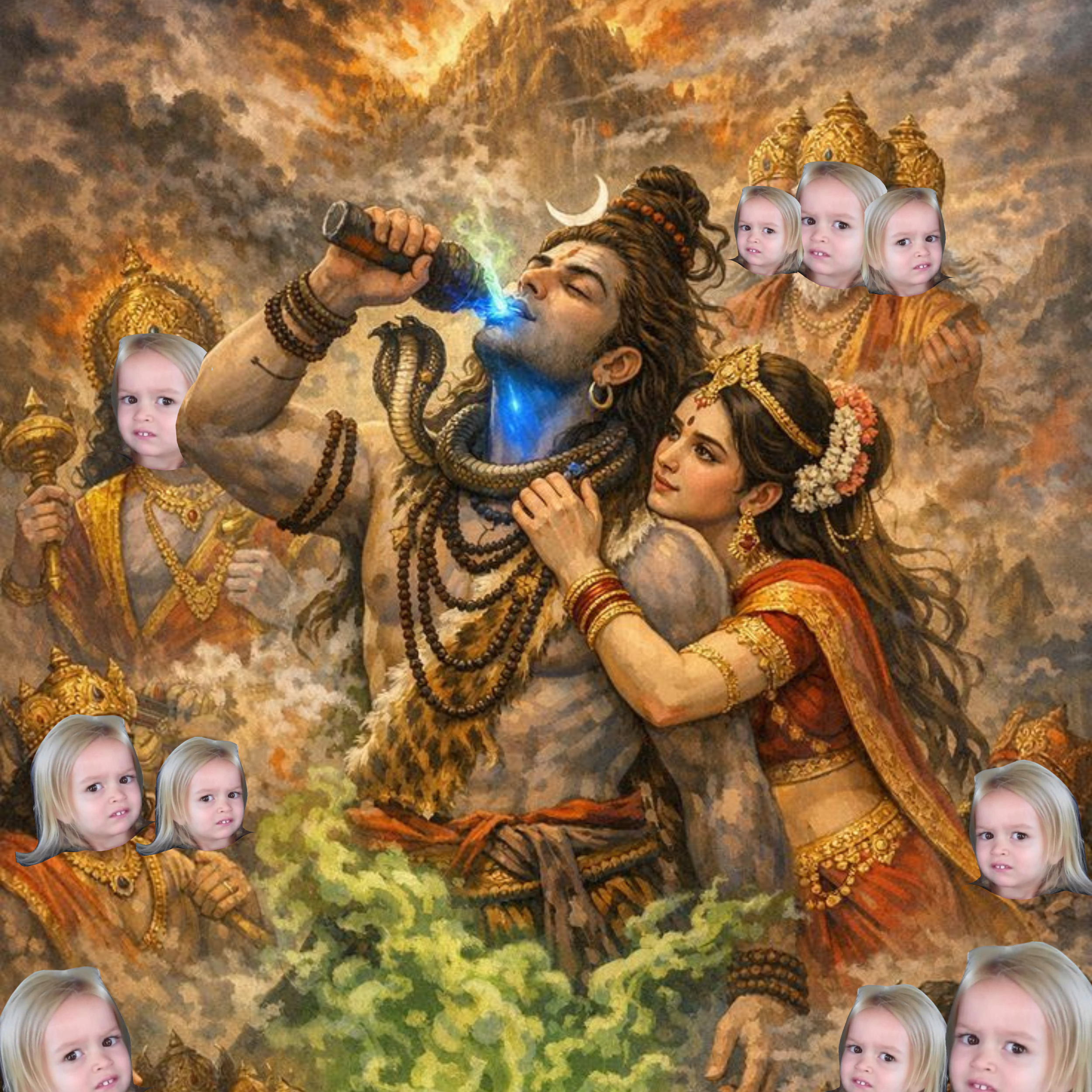
Shout out to the original image I found on Pinterest. Sorry I defiled it with ten side eye Chloes.
Anyway, Parvati came to his rescue with her divine wisdom and power. She was able to control the poison and trap it in Shiva’s throat so that it could not spread throughout his body. The poison was so strong that it turned Shiva’s throat blue. Shiva never asks to be mighty. He has no ego attached to his greatness or supremacy. He is respected by both gods and demons alike. He is compassionate enough to save the entire world. All of it. Not just the ones he deemed righteous or worthy
Everyone.
There are so many more stories that could be added here that reveal even more of Shiva’s paradox. In one myth, he catches the violent descent of Ganga in his matted hair and places her ever so gently so that the Earth is not destroyed. In another, the powerful king Ravana attempts to lift Mount Kailash, only to be effortlessly humbled beneath Shiva’s toe. The stories change, but the pattern is always the same. Shiva stands beyond the ordinary divisions of power, morality, and status. Among the cosmic forces represented by Brahma, Vishnu, and Shiva, Shiva ultimately reveals the deepest truth of existence. Creation begins, preservation sustains, but without dissolution, the universe would suffocate under its own weight. Shiva represents the necessary ending that allows all things to be reborn. His supremacy does not come from conquest or control, but from complete detachment. Free from ego, he alone moves between destruction and compassion, power and humility, solitude and love. Shiva is not merely a god within the universe. He is the force that reminds the universe that everything must eventually dissolve so something new can emerge.
You can worship creation. You can cling to preservation. But sooner or later, everyone meets the destroyer.
© 2026 Delaina Kashner | Kashner’s Vault